到府筆電收購 收購ASUS筆電 收購ROG電競筆電 收購ACER筆電 收購Msi電競筆電 收購微軟SURFAC 看全文

到府筆電收購
Posted on

我們專業經營各項3C高價回收,收購電競筆電,文書筆電,輕薄筆 電,MSI,ASUS,ACER,HP,Razer,GIGABYBE,Microsoft,,多通路多管道,非坊間垃圾回收價,價格不怕您比較,歡迎企業戶汰舊換新,續約販賣,分期換現,電競筆電, 二手汰舊,手機,筆電,相機,鏡頭,空拍機
AMD Radeon RAX 7900 XTX和XT:XTX的概述已關閉。
Review of the AMD Radeon RX 7900 XTX and XT: the XTX beats the Nvidia RTX 4080 for $200 less, except in power efficiency and ray tracing, and the XT comes close
到府筆電收購到府筆電收購
來自NVIDIA的RTX 4080和4090 GPU是令人難以置信的藝術家。它們的價格也非常昂貴,從$ 1,200和1,500美元,購買到府筆電收購msi,Gigabyte和Asus等合作夥伴卡。4080幾乎比原始PDSF昂貴的PDSF昂貴了兩倍。 699對於RTX3080。這些價格上漲部分是由大流行時代的關注所引起的,例如供應鍊和通貨膨脹的隆隆聲,部分是由加密貨幣(現在最終)助長的繁榮,這鼓勵了一個牛皮屑網絡。他們可以做到的高端GPU。遊戲也受到威脅,並且在高級製造過程中建造了巨大的單片芯片的成本和復雜性。今天,AMD試圖通過其串行GPU推出的最後兩個問題來解決最後兩個問題Radeon RX 7900.AT $ 899和$ 999,RX 7900 XT和RX 7900 XTX仍然客觀上是親愛的,但是由於它們的新攀登並不比RX 6900 XT的起始價格的攀升更多,所以兩張卡是什麼通過
Nvidia’s RTX 4080 and 4090 GPUs are amazing performers. They are also amazingly expensive, starting at $1,200 and $1,500 and going way up for cards from partners like 到府筆電收購msi, Gigabyte, and Asus. The 4080 is nearly twice as expensive as the original $699 MSRP for the RTX 3080.
These price hikes are caused in part by pandemic-era concerns like supply chain snarls and inflation and partly by a cryptocurrency-fueled boom (now over, blessedly) that encouraged a network of scalpers to snap up every single high-end GPU they could. Also at play was a lack of competition and the increasing cost and complexity of building gigantic, monolithic chips on cutting-edge manufacturing processes. Today, AMD is trying to solve the latter two problems with the launch of its Radeon RX 7900 series GPUs.
At $899 and $999, the RX 7900 XT and RX 7900 XTX are still objectively expensive—but because they’re not a further escalation over the starting price of the RX 6900 XT, both cards are what pass for a bargain in today’s GPU market. If you’re looking for cards that can consistently handle 4K gaming at 60 fps and higher, these GPUs do it for less than Nvidia’s latest, and they’re good enough and fast enough that they’ll hopefully start driving Nvidia’s prices down a bit, too.
But Nvidia still retains some key advantages that complicate an easy David-and-Goliath narrative. These GPUs don’t quite feel like a Ryzen moment for AMD’s graphics division—a turning point where a scrappy AMD manages to make a big dent in the market share of an entrenched, complacent competitor. But if you can actually find them for their starting prices, they’re the first sign we’ve had in a while that some relief is coming for high-end-but-price-conscious PC gamers.
The RX 7000 series is the third version of the RDNA GPU architecture, also occasionally referred to as “Navi,” after the codenames of the GPU chips themselves. RDNA 3 doesn’t add anything that feels as significant as RDNA 2’s ray-tracing support, but AMD has added plenty of extra hardware and made important under-the-hood changes.
The most significant is a new chiplet-based approach, similar in concept to the one AMD uses for its Ryzen CPUs. Rather than building the entire GPU die on one manufacturing process—increasing the die’s size and therefore the chances that some or all of it could be defective—AMD is building the main Navi 3 GPU die on a 5 nm TSMC manufacturing process and a series of smaller memory controller dies (MCDs) on a 6 nm process. These chips are all linked together with a high-speed interconnect, which AMD says can transfer data at speeds of up to 5.3 terabytes per second.
The main graphics compute die (GCD) contains most of the hardware you think of when you think of a GPU—compute units, shaders, ray-tracing hardware, the media encoding and decoding block, and display output. Both the 7900 XTX and XT use the same Navi 31 GCD, but the XTX runs at higher clocks and has more CUs and stream processors enabled. The XTX has 96 CUs and 6,144 stream processors, while the XT has 84 CUs and 5,376 stream processors. Both cards represent a jump up from the Navi 21 die used in the RX 6900 series, which maxed out at 80 CUs and 5,120 stream processors (and that’s before you account for other performance-boosting improvements).
The MCDs all include a single 64-bit memory controller and 16MB of AMD’s Infinity Cache, and they demonstrate the advantages of a chiplet-based approach. The 7900 XTX has a 384-bit-wide memory bus and 96MB of Infinity Cache, where the 7900 XT has a 320-bit bus and 80MB of cache; to accomplish this, all AMD has to do is remove an MCD. The exact same MCDs can be reused up and down the stack with all of the different RDNA 3 GCDs that AMD chooses to release, from low-end products with a single MCD up to midrange GPUs that use between two and four. Defects in MCD dies won’t require the larger, more complex GCDs to be thrown out or binned, and vice-versa.
In the realm of all-new features for RDNA 3, there are three things of note. First, the GPUs include new AI accelerators, which could be useful both for the plethora of AI-assisted content creation that has sprung up in the last year and for AI-assisted upscaling (if AMD chooses to implement it in some future version of its FSR upscaling algorithm; both DLSS and XeSS use AI for upscaling, but FSR 2.0 doesn’t).
Second, the video encoding and decoding block supports hardware-accelerated encoding for the AV1 video codec, just like the RTX 4000 series and Intel’s Arc GPUs. This should be useful for both content creators and streamers who want to stream higher-resolution video or video at the same resolution while using less bandwidth.
And third, the “Radiance Display Engine” adds DisplayPort 2.1 support to the GPUs. Monitors that take full advantage of DisplayPort 2.1’s extra bandwidth don’t really exist as of this writing, but when they do, RDNA 3 GPUs will be able to drive 4K displays at up to 480 Hz and 8K displays at up to 165 Hz.
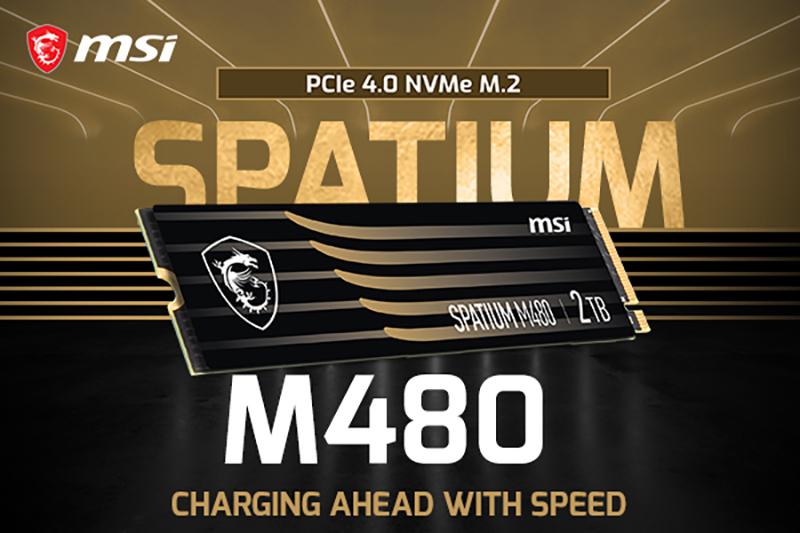
(照片源 / 到府筆電收購msi可用)到府筆電收購msi技術(到府筆電收購msi)發布了SSD SSD SSD SSD,包括GEN4和PCLE NVME SOLID -STATE HARD DRIVE GEN和M480,M470和M370.M.2 2280選定的外觀大小。到府筆電收購msi Spatium系列也用於擴展生態系統的有效儲能設備。這個高質量的固體系列使用NAND NAND,這是其有效性,有效性和耐用性的最佳解決方案,由專業人員,內容製造商和玩家提供。請關注閱讀…(照片 /演示者到府筆電收購msi的來源)連續和連續寫作速度為6850 MB / S。固體速度,可持續閱讀速度為5000MB / s,可持續寫作速度為4400 MB / s,使消費者可以享受最新一代的高速Gen4 M470,提供1 TB的存儲容量)M370Spatium M370包括在門,門,門上,使用PCIE GEN3接口。但是,M370仍然可以提供基本事件,傳輸快速文件的功能以及非常短的存儲時間。連續閱讀速度達到2,400MB/s,可持續寫作速度1850MB/秒。在綜合的spatium功能中支持所有堅固的硬盤產品,以進行數據安全和錯誤校正,包括保護LPDC ECC和E2E數據,並提供高的TBW以實現出色的耐力和服務。此外,這種堅實的硬盤驅動器還有5年的保修期限有限。
 (圖片來源/到府筆電收購msi 提供)
微星科技(到府筆電收購msi)發布 SPATIUM 系列 SSD 固態硬碟產品線,包含M480、M470 及 M370 等 Gen4 和 Gen PCle NVMe 固態硬碟,採用可以相容桌上型主機和筆記型電腦的M.2 2280 外型尺寸規格。
到府筆電收購msi SPATIUM 系列是品牌拓展生態系統至高效能存儲裝置之類別。這系列固態硬碟採用了高質量及高密度的 3D TLC NAND Flash 顆粒,專為專業人士、內容創作者及遊戲玩家提供的效能及耐用性兼具之最佳方案。
 (圖片來源/到府筆電收購msi 提供)
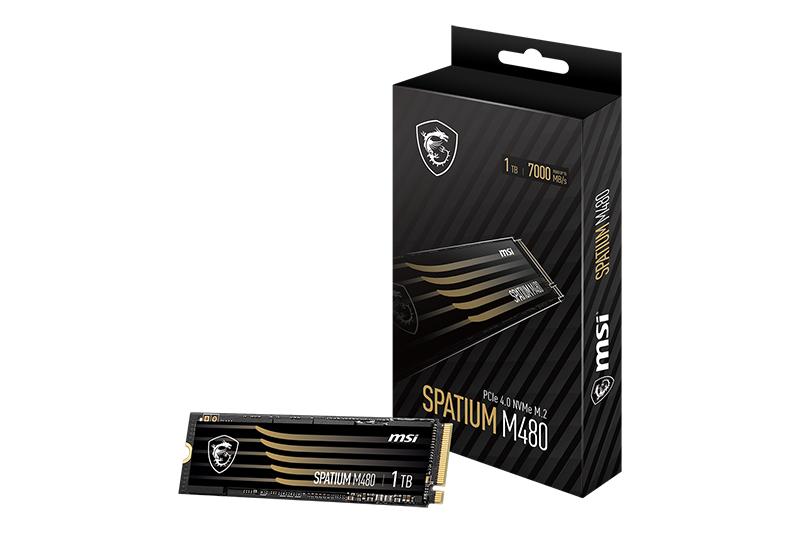
M480
SPATIUM M480 為內容創作者及遊戲玩家帶來了全新層級的儲存效能。M480 符合 PCIe Gen 4 和 NVMe 1.4 標準,並釋放最新的極速傳輸速度,最高可達 7000MB/ 秒之連續讀取速度和 6850MB/秒之連續寫入速度。M480 提供 500GB、1TB 和 2TB 容量,為整個 SPATIUM 系列固態硬碟產品中速度最快的。
 (圖片來源/到府筆電收購msi 提供)
M470
SPATIUM M470 旨在滿足主流固態硬碟消費者群。高達 5000 MB/秒的連續讀取速度和 4400 MB/秒的連續寫入速度,讓消費者能夠享受最新一代的高速 PCIe Gen4 介面。M470 提供 1TB 及 2TB 兩種儲存容量。
 (圖片來源/到府筆電收購msi 提供)
M370
SPATIUM M370 為此系列入門款,使用 PCIe Gen3 介面。然而,M370 依然能夠提供快速文件傳輸及極短的儲存時間的基本效能及優點。M370 提供 256GB、512GB、1TB 和 2TB 儲存容量,且高達 2400MB/秒的連續讀取速度和 1850MB/秒連續寫入速度。
所有 SPATIUM 固態硬碟產品都支援全方位的資料安全性和糾錯功能,包括 LPDC ECC 和 E2E 資料防護,並提供高 TBW 以實現出色的耐用性和使用壽命。另外,這些固態硬碟亦享有 5 年有限保固期。
到府筆電收購 到府筆電收購